Trending

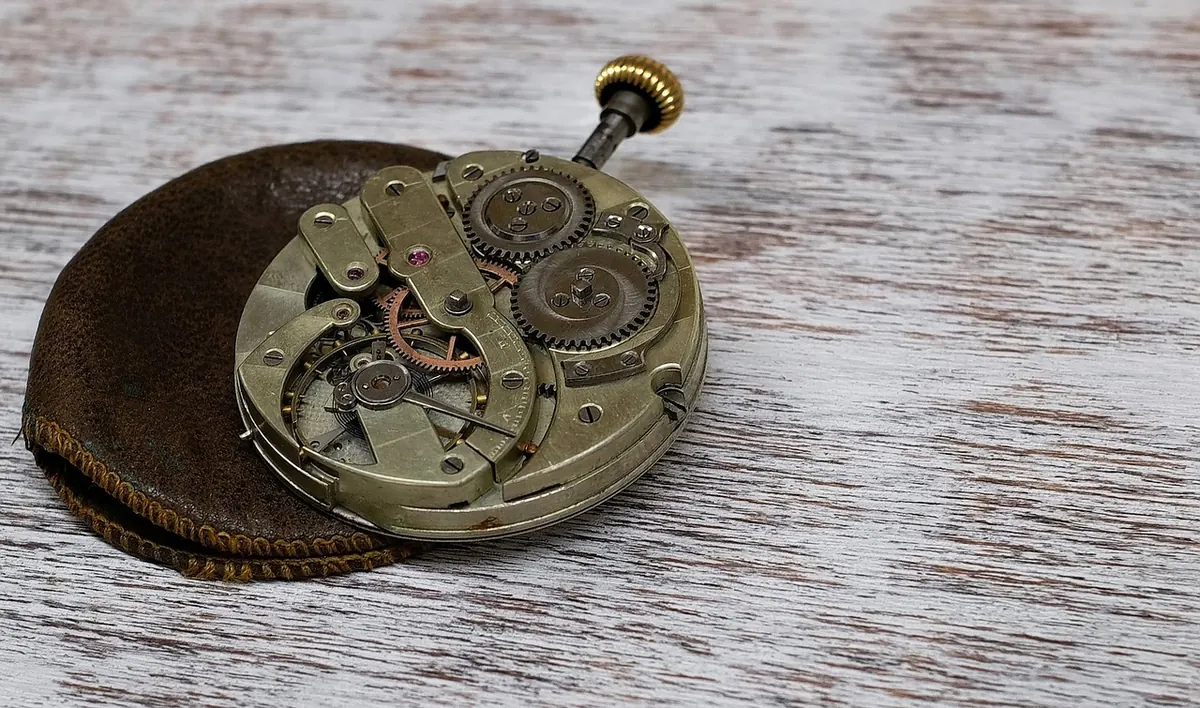
A ticking second hand is the first thing people notice. The second thing — the one that decides whether a watch stays in your life — is what happens in year three, when the battery dies, or year seven, when the oil has thinned and the amplitude drops. Quartz and mechanical watches are both perfectly good at telling time. They are very different things to own.
What follows is the ownership comparison: accuracy as it actually behaves on a wrist, the maintenance each one demands, how repairs work when something fails, and what a decade of running costs looks like side by side.
A quartz watch counts the vibrations of a tiny crystal, typically 32,768 of them per second. A mechanical watch counts the swings of a balance wheel, usually six to eight per second. That difference in frequency explains almost everything about how the two keep time.
A decent quartz movement will drift a handful of seconds per month. A good mechanical movement is considered excellent when it stays within a few seconds per day, which compounds to a minute or two a month. On paper, quartz wins by an order of magnitude, and for many people that ends the argument.
The nuance is in how each one errs. Mechanical watches vary with position: a watch that gains two seconds a day flat on a nightstand may lose one on the wrist. Temperature, magnetism from a laptop or a bag clasp, and how wound the mainspring is all nudge the rate. Quartz is more stable, but it too responds to temperature, and a dying battery can send the rate wandering before the watch stops altogether. If you want genuine set-and-forget accuracy, a radio-controlled or GPS-synced quartz is the pragmatic answer; a thermocompensated quartz is the expensive one.
A standard quartz watch asks for a battery every few years, depending on the movement and what it drives. That is the whole ritual, and it is worth doing properly.
Solar and kinetic quartz change the rhythm: no battery for a decade or more, but the rechargeable cell does eventually need replacing, and those cells are less universal than a standard button cell. Otherwise, a quartz watch that is running well needs nothing. No oiling schedule, no regulation, no drama.
A mechanical watch is a small machine running on a film of lubricant measured in microns. That oil migrates, thickens and dries. When it stops doing its job, metal meets metal, and the wear that follows costs far more than the service that would have prevented it.
The usual advice is a full service every five to seven years. In practice, plenty of owners stretch it longer, and a well-made watch running accurately with healthy amplitude can often wait. Two things are worth watching: rate stability and water resistance. If a watch starts gaining or losing noticeably, or the power reserve shortens, book it in. If it's a diver, or you swim in it, service the gaskets on schedule regardless of how well it runs.
A full service means disassembly, cleaning, fresh lubrication, reassembly, regulation and usually new gaskets, plus case refinishing if you want it. It is skilled, slow work, and it is priced accordingly. On an entry-level mechanical watch, a service can approach a meaningful share of what the watch cost new, and sometimes more than the watch is worth secondhand. That sounds absurd until you realise you are paying for hours of a trained hand, not for parts.
Take two watches bought on the same day for similar money, worn for a decade.
The quartz bill is predictable and small. The mechanical bill is larger but arrives rarely, and — this is the part people forget — a serviced mechanical watch from a respected brand tends to hold value in a way a quartz watch rarely does. Buy well, keep the papers and the service receipts, and the mechanical's total cost of ownership can land closer to the quartz's than the invoices suggest. Buy a fashion-brand mechanical with an outsourced movement and no parts support, and it won't.
Quotes vary enormously by brand, movement and country, so ask your watchmaker for an estimate rather than trusting numbers you read in a forum.
Quartz movements are modular. When something inside fails, the standard fix is to swap the whole movement, which is fast, cheap and effective. The exception is anything proprietary: ana-digi modules, some solar movements, unusual complications. Those can be unobtainable, and a dead module turns a nice-looking watch into a paperweight.
Mechanical watches are repairable in principle — almost any part can be made or found — but the practical picture depends on the brand. Mainstream Swiss and Japanese manufacturers support their movements for years and supply parts to approved watchmakers. Independent brands and vintage pieces are a different game: parts are scarce, waits are long, and the person you need is a specialist with a bench full of tiny drawers. Fewer watchmakers are entering the trade than are leaving it, which is why good independents are booked out months ahead.
A mechanical watch likes being worn. Movement keeps the oil distributed and the mainspring exercised; a watch left in a drawer for two years often needs a service it would otherwise have avoided. If you rotate several, wind them occasionally and let them run for a day.
Quartz punishes neglect differently, with battery leakage. If you are putting one away for a long stretch, pull the crown out to stop the movement, or better, have the cell removed. Store both types away from magnets — speakers, tablet cases and bag clasps are the usual culprits.
Buy quartz if you want a watch to be a tool: accurate, indifferent to routine, cheap to keep alive. Solar quartz is the low-effort sweet spot. Buy mechanical if you enjoy the object itself — the sweep, the winding, the sense of a mechanism ticking away under your cuff — and if you are willing to budget a service the way you budget tyres for a car.
Whichever you choose, ask two questions before you buy. Who will service this in five years, and can they get parts? A watch is only as good as its maintenance path. Answer those, and the rest is taste.
Photo: Couleur / Pixabay