Trending


There is a particular sound a clock tower makes just before it strikes: a click, a small mechanical throat-clearing, a pause — and then the note. Most people in a town hear it several times a day and never look up. If you have decided to look up, and to go inside, a little preparation turns a pleasant curiosity into an afternoon you will still be describing a year later. Clock towers are working buildings, not museums, and the people who look after them are usually generous with their time when someone arrives with sensible questions.
Start with the buildings rather than with a search engine. Public clocks rarely advertise themselves; they are working parts of a church, a town hall, a market or a station. Walk your own high street with your eyes above the shopfronts for a week and you will almost certainly spot two or three you had stopped noticing.
Places worth checking, roughly in order of how easy they are to get into:
Local history societies, civic trusts and bell-ringing groups are the fastest route to a name and a phone number, and heritage open days in many countries briefly open buildings that are otherwise shut. Ask specifically for the person who winds the clock rather than for the building's general enquiries line; that is where the knowledge sits.
The single most useful piece of scheduling advice is to arrive ten or fifteen minutes before the hour. You want to hear the warning strike, the quarter chimes if there are any, and the full hour sequence, and you want to be standing somewhere you can see the dial at the same moment. A clock that seems ordinary at ten past three can be thrilling at two minutes to four.
Ask about the stairs before you commit. Tower stairs are often original stone spirals, sometimes worn into hollows, often narrow, sometimes lit by one bulb on a timer. Take a small torch, wear flat shoes with grip, and leave the large bag at home. If anyone in your group has mobility problems, ask whether the clock room is reachable at all — many are not, and it is better to know that before climbing ninety steps.
Weather matters more than you would think. Damp stone stairs are slippery, and dials are easiest to read from the street on a bright, dry day with the light behind you rather than in front.
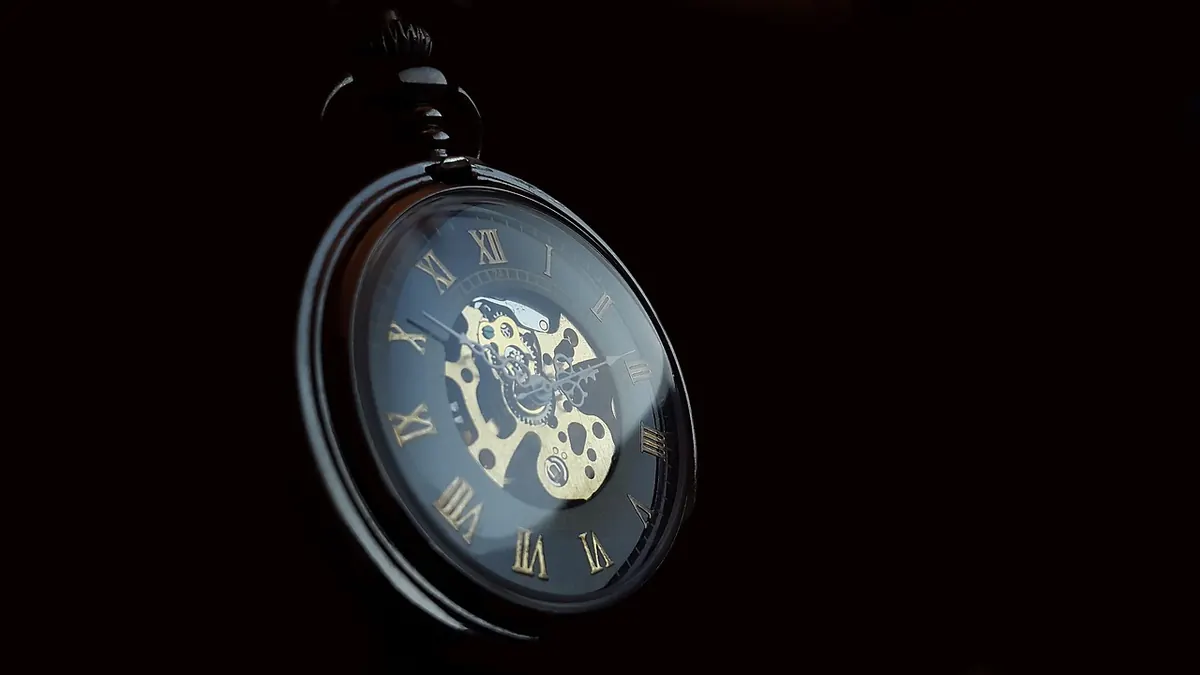
Before you go in, stand back on the far side of the road and look properly. The dial tells you a great deal about the clock behind it and about the town that paid for it. Note whether the numerals are Roman or Arabic, and whether the figure four is written as IIII, which is common on clock dials and not an error. Look for a minute hand: many older movements were built as hour-hand-only clocks, and a slender minute hand is frequently a later addition along with the minute ring it points at.
Check whether the dial is a skeleton, with the ironwork visible through open spaces, or a solid painted plate. Look for the maker's name and the date on the surround or the chapter ring, though treat both with caution — dials were repainted, re-gilded and replaced far more often than movements were. And look at the faces on the other sides of the tower. A blank or painted-on dial facing the less fashionable direction is a small, very human piece of economy that survives on hundreds of towers.
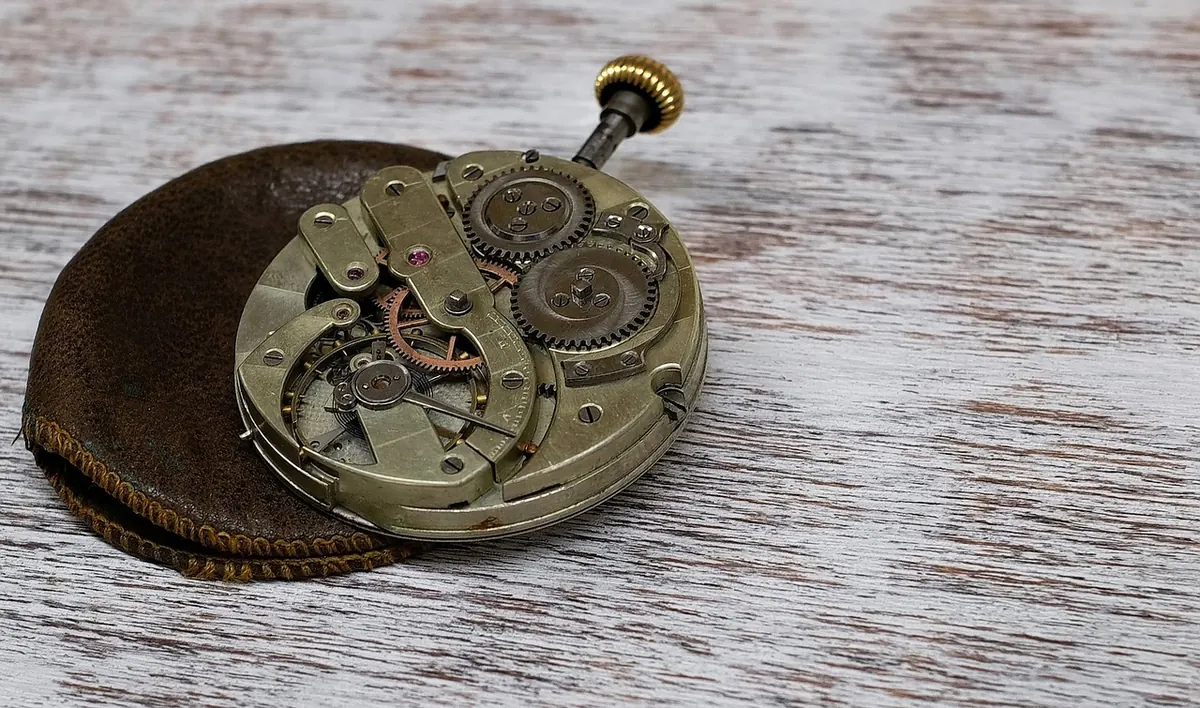
Most tower clocks are two machines bolted to the same frame: a going train that drives the hands and a striking train that releases the hammer. Look for both frames, the great wheels, and the lines or cables carrying the driving weights up and down a shaft. Note whether the weights are original cast iron or later substitutes, and where they run — a weight shaft, a corner of the tower, or a sealed tube.
The pendulum, if there is one, is usually the longest thing in the room, hanging through a slot in the floor. Resist the urge to steady it. Look instead at the escapement at the top and at any sign of how the clock is corrected, adjusted or kept in beat. Winding arrangements vary enormously: some clocks are still wound by hand with a handle and a long, patient crank; some have been fitted with automatic electric winding motors that raise the weights; some have been converted to a master clock system or fully electrified, with the original movement retained as a display. All three are worth seeing, and the differences are exactly what a good guide will want to explain.
If you are taken up to the bell chamber, the clock becomes physical in a new way. The hour bell is struck by a hammer worked by the clock, not by a rope, and it can be startlingly loud in a confined space. Ask before you go in and take hearing protection if it is offered. Look at the bell frame, the headstocks and the wheels, and ask which bell the clock strikes — it is often, but not always, the tenor of the ringing peal. On many towers the quarter chimes use a separate set of smaller bells, and the mechanism that does it is a small, elegant piece of engineering in its own right.
The quality of a visit depends almost entirely on the questions you bring. These tend to open people up rather than close them down:
That last one is usually the best question of the day. Every tower clock has a temperament — a train that runs fast in cold weather, a hammer that bounces, a set of stairs that floods.
Ask permission in advance and confirm who will meet you. Arrive early, and plan to stay until a few minutes past the hour. Dress for stone stairs and dust: flat shoes, a torch, earplugs if bells are involved. Keep your hands off the movement, the pendulum and the weights, and never oil anything, however well intentioned. Photograph the dial from outside before you climb, with the sun behind you, and ask before using a flash near glazing or in a bell chamber. Leave a donation, thank the winder by name, and write down what you saw while it is fresh — the maker, the date on the dial, the number of steps, whether the weights were hand-wound.
Then go back at a different time of day. A tower clock seen once is a curiosity; seen in winter light, at dusk, and with the hour striking overhead, it becomes part of the fabric of the place you live.
Photo: 12019 / Pixabay